23 Oct Wax is not enough for Winter protection
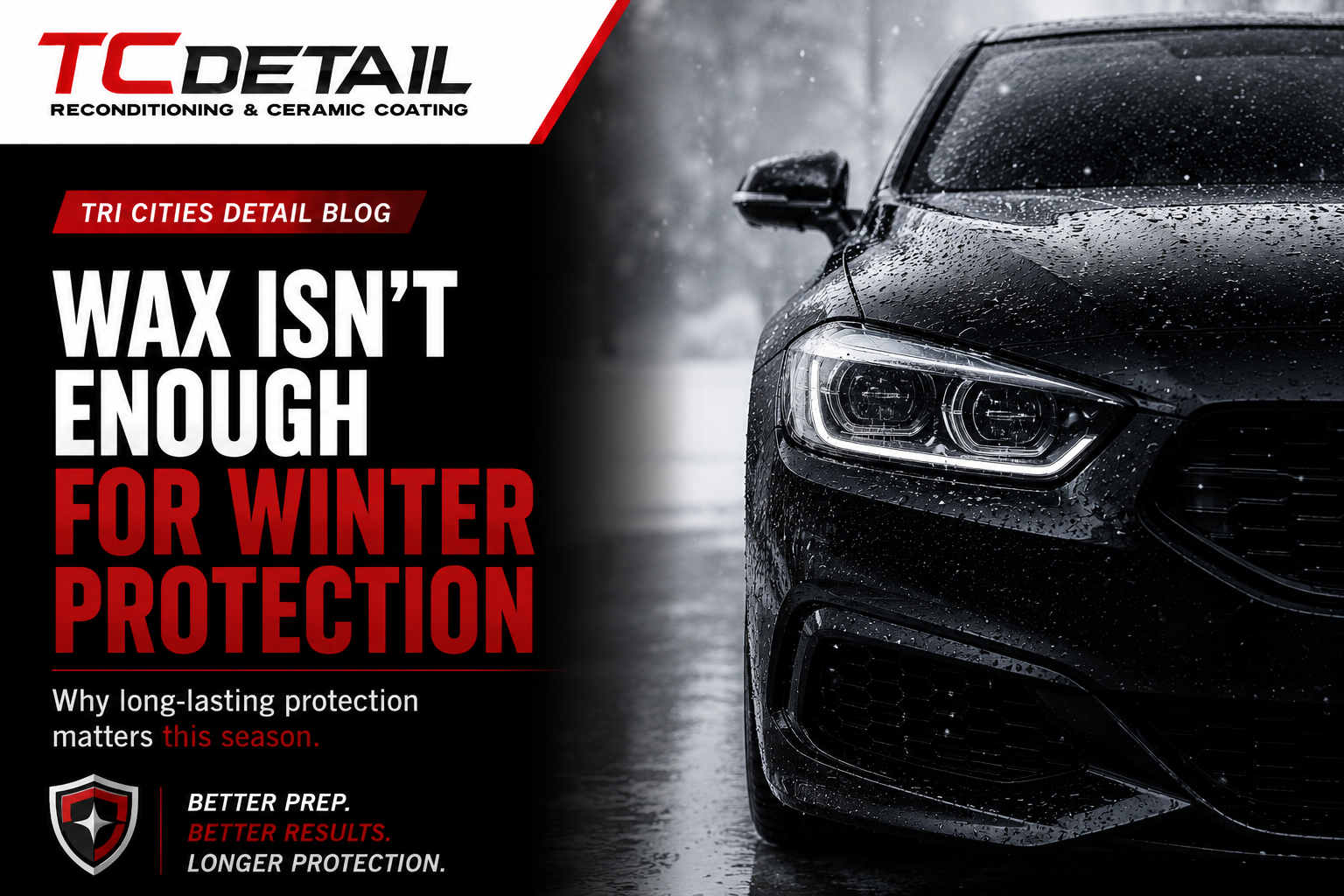
Wax Isn’t Enough for Winter Protection
As the weather begins to cool down, many vehicle owners start thinking about protecting their paint before winter arrives.
One question we hear every fall at Tri Cities Detail is:
“Should I just put a coat of wax on my vehicle before winter?”
Wax certainly has its place, and it’s far better than having no protection at all.
But if you’re relying on traditional wax to get your vehicle through months of rain, freezing temperatures, road grime, and winter road treatments, you may be disappointed.
Let’s look at why.
Winter Is Hard on Your Vehicle
Winter brings some of the harshest conditions your vehicle will face all year.
Even here in the Tri-Cities, your paint is exposed to:
- Rain
- Mud
- Dust
- Hard water
- Road grime
- Magnesium chloride
- Road salt in surrounding areas
- Cold temperatures
- Constant moisture
All of these contaminants work together to wear away paint protection much faster than they do during the summer.
What Does Car Wax Actually Do?
Traditional carnauba wax creates a protective layer over your paint that helps:
- Improve gloss
- Add water beading
- Make washing easier
- Protect against light contamination
It’s a great product for enthusiasts who enjoy waxing their vehicle regularly.
The problem is that wax is designed to be a short-term protectant.
Why Wax Doesn’t Last Through Winter
Wax gradually wears away every time your vehicle is exposed to:
- Rain
- UV rays
- Road grime
- Repeated washing
- Strong cleaning chemicals
- Freezing temperatures
During the winter months, those conditions happen much more frequently.
Depending on the product and driving conditions, many traditional waxes last only a few weeks to a couple of months.
That often means your vehicle loses much of its protection before winter is even halfway over.
Paint Sealants Offer Better Protection
If you’re looking for longer-lasting protection without stepping up to a ceramic coating, a quality synthetic paint sealant is a great option.
Compared to traditional wax, paint sealants generally provide:
- Longer durability
- Better chemical resistance
- Improved water beading
- Better protection against UV rays
- Greater resistance to road grime
Many modern sealants can protect your vehicle for several months when properly maintained. All or our exterior detail services include a paint sealant.
Ceramic Coatings Take Protection Even Further
For drivers who want the highest level of paint protection, ceramic coatings offer significant advantages.
A professional ceramic coating provides:
- Long-lasting durability
- Excellent chemical resistance
- Outstanding water repellency
- Easier washing
- Increased gloss
- Better resistance to environmental contamination
Instead of lasting weeks, a professionally installed ceramic coating can provide protection for years with proper maintenance.
Easier Winter Washing
One of the biggest benefits of better paint protection isn’t just durability—it’s maintenance.
Protected paint allows:
- Snow to slide off easier.
- Dirt to rinse away faster.
- Less road grime to stick.
- Easier bug removal.
- Faster drying.
- Better water beading.
When it’s 35 degrees outside, every minute saved washing your vehicle matters.
What About Touchless Car Washes?
During winter, many people rely on touchless automatic washes to remove road grime and magnesium chloride.
While they’re often the safest automatic option, they also use stronger alkaline cleaners to compensate for the lack of brushes.
These chemicals can shorten the life of traditional wax much faster than they affect a quality ceramic coating.
That’s another reason stronger protection pays off during winter.
Don’t Wait Until Winter Arrives
One of the biggest mistakes we see is waiting until after the weather turns bad before protecting the paint.
By then, your vehicle may already be exposed to:
- Rain
- Mud
- Road chemicals
- Hard water
- Moisture
Applying protection before winter arrives gives your vehicle a much better chance of making it through the season with minimal damage.
Which Protection Is Right for You?
Every vehicle owner has different goals.
Traditional Wax
Best for:
- Weekend vehicles
- Show cars
- Enthusiasts who enjoy frequent detailing
Paint Sealant
Best for:
- Daily drivers
- Longer-lasting protection
- Better winter durability
- Great value
Ceramic Coating
Best for:
- Long-term paint protection
- Easier maintenance
- Maximum gloss
- Year-round durability
- Drivers who want the best available protection
The Takeaway
Traditional wax still has its place—but winter is one of the toughest seasons for any paint protectant.
If you’re serious about protecting your vehicle through months of rain, road grime, and winter driving, a quality paint sealant or professionally installed ceramic coating offers significantly better durability and protection.
The best time to prepare your vehicle for winter isn’t after the first storm—it’s before the season begins.
At Tri Cities Detail, we help drivers choose the right level of protection for their vehicle, lifestyle, and budget. Whether you’re looking for a seasonal paint sealant or a long-term ceramic coating, we’ll help keep your vehicle protected through every season.
Winter Protection Comparison
| Protection Type | Typical Durability | Best For | Winter Performance |
|---|---|---|---|
| Carnauba Wax | 2–6 weeks | Show cars & enthusiasts | ★★☆☆☆ |
| Synthetic Paint Sealant | 4–6 months | Daily drivers | ★★★★☆ |
| Professional Ceramic Coating | Multiple years (with proper maintenance) | Long-term protection | ★★★★★ |
The Tri-Cities may not see months of heavy snow like other parts of the country, but our combination of rain, hard water, dust, and magnesium chloride can be just as hard on your vehicle’s finish. Choosing the right protection before winter arrives can save you time, preserve your paint, and make maintenance much easier throughout the season.
Sorry, the comment form is closed at this time.